

Beware of the Fake Remote Job Scam That Starts with a Check
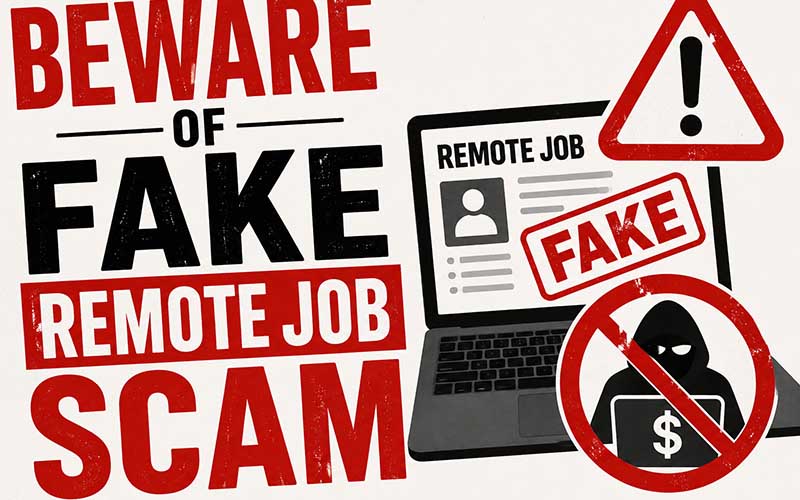
The rise of remote work has created countless legitimate opportunities, but it has also opened the door for increasingly sophisticated employment scams. One of the most common schemes circulating today involves fake job offers, rushed hiring processes, and counterfeit checks sent to unsuspecting applicants.
A recent case shared on Reddit perfectly illustrates how convincing these scams can be. A job seeker applied for a remote administrative position through what appeared to be a legitimate job board. Within just 24 hours, they were contacted via Microsoft Teams, completed a brief text-based interview, and were offered the position the very same day. Shortly afterward, they received notification that a cashier’s check worth $4,500 was on its way to help purchase work equipment. Fortunately, something didn’t feel right, and they verified the check directly with the issuing financial institution—only to discover it was completely fake.
While this story had a happy ending, many others are not so fortunate.
How the Scam Works
The fraud follows a familiar pattern. Scammers advertise attractive remote positions with competitive salaries and minimal hiring requirements. They often impersonate real companies or recruiters to appear trustworthy.
Once they have a candidate’s attention, they move quickly. Applicants may receive a text-only interview, be hired almost immediately, and then be told that the company will provide funds for office equipment. A cashier’s check—often for several thousand dollars—is sent to the victim with instructions to deposit it immediately.
The victim is then instructed to purchase a laptop, software, or other supplies from a “preferred vendor.” That vendor is actually controlled by the scammers. By the time the bank discovers that the check is fraudulent, the victim has already sent real money to the criminals. Since banks often make deposited funds temporarily available before a check fully clears, victims can mistakenly believe the payment was legitimate. Eventually, the fake check is reversed, leaving them responsible for the lost money.
Warning Signs You Should Never Ignore
Although scammers continue to refine their techniques, several red flags remain consistent:
You’re hired after a very short or text-only interview.
The employer rushes you to complete paperwork or make purchases.
You’re sent a check before performing any work.
You’re instructed to buy equipment from a specific vendor.
The recruiter pressures you to act within 24 hours.
Communication happens exclusively through messaging apps rather than official company channels.
Any one of these signs should prompt additional verification. Seeing several together is a strong indication of fraud.
How to Protect Yourself
Legitimate employers generally provide equipment directly or reimburse expenses through established payroll processes—not by mailing large checks before you’ve even started working.
If you’re unsure whether a job offer is genuine:
Verify the company through its official website rather than links provided in emails.
Contact the company’s HR department using publicly listed contact information.
Never deposit a check from an employer you haven’t independently verified.
Never send money or purchase equipment from a vendor chosen by someone you’ve only communicated with online.
Be cautious of employers that hire unusually quickly without conducting proper interviews.
Government agencies also warn that genuine employers will never require applicants to pay money upfront or deposit checks before beginning employment.
Stay Skeptical, Stay Safe
Job seekers are often targeted because they’re excited about new opportunities and eager to begin working. Scammers exploit that optimism by creating a sense of urgency and making everything appear professional.
The good news is that these scams are preventable. Taking just a few extra minutes to verify a company’s identity, question unusually fast hiring decisions, or confirm the authenticity of a payment can save thousands of dollars and countless hours of stress.
If a remote job offer seems unusually generous, moves at lightning speed, or involves receiving money before you’ve done any work, trust your instincts. A legitimate employer wants to hire you—not ask you to process suspicious checks or send money to third parties.
When it comes to online job offers, a healthy dose of skepticism is one of the best investments you can make.
 Check out our marketplace
 Check out our marketplace