

What New PC Graphics Cards Can We Expect in 2027?
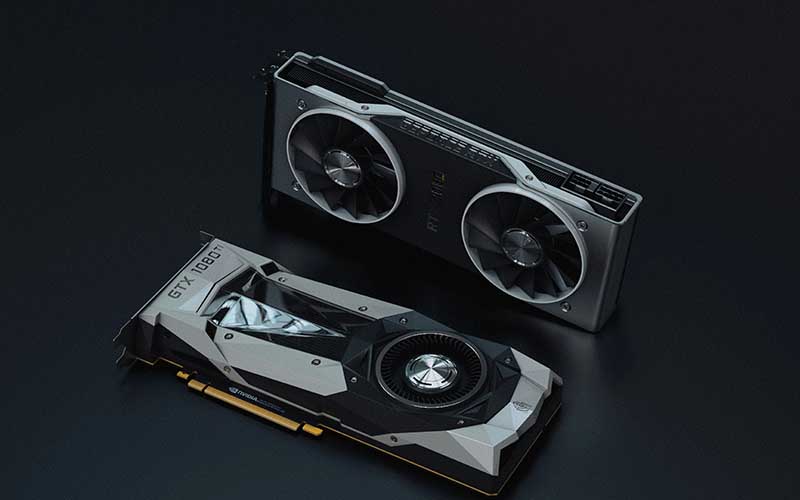
The graphics card market could be in for an interesting period in 2027. With NVIDIA, AMD and Intel all working on their next-generation GPU architectures, PC gamers may have several new options to consider. However, unlike previous hardware cycles, the next generation might take longer to arrive, with memory shortages, growing demand for AI hardware and changing market priorities potentially affecting launch schedules.
So, what new PC graphics cards can we realistically expect in 2027, and what improvements could they bring?
NVIDIA: RTX 50 SUPER or RTX 60 Series?
NVIDIA will likely remain the biggest player in the dedicated graphics card market in 2027. However, its next-generation GeForce RTX 60 series might not arrive as early as enthusiasts originally expected.
The RTX 60 family is reportedly based on NVIDIA’s upcoming Rubin architecture, which is also being developed for data centre and AI workloads. Early speculation suggested that consumer graphics cards could arrive in late 2027, but more recent reports point towards a possible delay until 2028. This means NVIDIA might not introduce an entirely new GeForce generation during 2027.
Instead, the company could focus on refreshing its existing RTX 50 lineup. Rumours surrounding RTX 50 SUPER graphics cards have suggested improved specifications, potentially including higher memory capacities and better performance. Models such as the RTX 5080 SUPER, RTX 5070 Ti SUPER and RTX 5070 SUPER have been mentioned, although NVIDIA has not officially confirmed these products.
A particularly interesting possibility is an RTX 5080 variant with 24GB of GDDR7 memory. More VRAM would be beneficial for demanding games, high-resolution textures, creative applications and AI workloads.
If the RTX 60 series does arrive in 2027, it would likely bring improvements to ray tracing, AI processing and power efficiency. However, at this point, a 2028 launch appears increasingly plausible.
AMD: RDNA 5 Could Be the Biggest Development
AMD could have a more interesting year ahead in terms of gaming graphics hardware. The company is reportedly preparing its next-generation RDNA 5 architecture, which could represent a significant step forward compared with the existing RDNA 4 generation.
Industry reports based on discussions with graphics card manufacturers at Computex 2026 suggest that AMD’s next-generation gaming GPUs could arrive during the second half of 2027. However, some manufacturers believe the launch could slip into early 2028.
RDNA 5 is particularly interesting because AMD is expected to move towards a more unified graphics architecture, bringing technologies developed for gaming and professional computing closer together. This direction is associated with AMD’s broader UDNA strategy.
For gamers, the most important improvements could involve better ray-tracing performance, more efficient hardware utilisation and stronger AI acceleration. AMD will also need to continue improving its FidelityFX Super Resolution technology to compete with NVIDIA’s DLSS ecosystem.
Although specific graphics card models and specifications remain unknown, AMD will likely target multiple market segments, from high-end enthusiast products to more affordable gaming GPUs.
If AMD manages to deliver competitive performance at attractive prices, RDNA 5 could provide some much-needed competition in the GPU market.
Intel: Will Arc Finally Become a Serious Alternative?
Intel is another company worth watching, although its future in the dedicated gaming GPU market remains less certain.
The company’s existing Arc Battlemage graphics cards demonstrated that Intel could produce competitive budget and mid-range GPUs. However, its next-generation Celestial architecture has faced uncertainty, with reports suggesting that dedicated gaming products based on it may have been cancelled.
Intel’s longer-term roadmap also includes Xe4, reportedly known as Druid. Some industry leaks point towards a potential late-2027 or 2028 timeframe, but it remains unclear whether Intel will release a dedicated gaming graphics card using this architecture.
This is an important distinction because Intel’s graphics technology also serves integrated graphics and professional computing markets.
If Intel continues developing discrete gaming GPUs, it could become a valuable competitor in the affordable segment. More competition would benefit consumers through better prices, improved driver support and greater innovation.
What Improvements Can We Expect From 2027 GPUs?
Regardless of which manufacturer launches new products first, several technological improvements are likely to define the next generation.
Ray tracing should remain a major focus. More powerful dedicated hardware could make realistic lighting, reflections and shadows accessible at higher resolutions without such a significant performance penalty.
AI-powered rendering will also become increasingly important. NVIDIA’s DLSS, AMD’s FSR and Intel’s XeSS have already changed how modern games achieve higher frame rates. Future versions could offer better image reconstruction, more advanced frame generation and improved visual quality.
Memory capacity is another important consideration. As modern games become more demanding, graphics cards with 16GB or more VRAM could become increasingly attractive, particularly for 4K gaming.
Finally, power efficiency will matter. With flagship graphics cards already consuming substantial amounts of electricity, manufacturers will face pressure to deliver better performance without dramatically increasing power requirements.
Should You Wait for a New GPU in 2027?
For anyone planning a gaming PC upgrade, 2027 could be worth watching, but expectations should remain realistic.
AMD’s RDNA 5 appears to be one of the most promising developments, although its availability could be limited to the second half of the year or even 2028. NVIDIA may introduce RTX 50 SUPER models instead of launching its next major generation, while Intel’s plans remain uncertain.
The biggest question is not simply how fast these graphics cards will be, but how much they will cost and how widely they will be available.
The GPU market is facing considerable pressure from the AI industry and memory supply constraints. These factors could influence both pricing and launch schedules.
For now, 2027 looks more like a transitional year than a guaranteed revolution in PC gaming graphics. Nevertheless, AMD’s RDNA 5, potential NVIDIA SUPER refreshes and Intel’s future Arc developments give enthusiasts plenty of reasons to keep an eye on the market.
 Check out our marketplace
 Check out our marketplace